Brosis - ID Card: A Practical Evaluation for Professional Identity Design
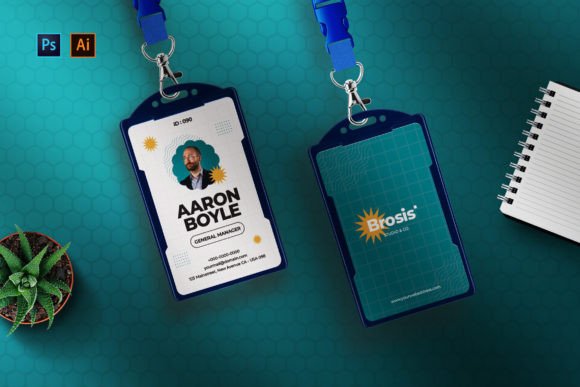
In the modern professional landscape, a physical identity card often serves as the first tangible interaction a client or colleague has with your brand. While digital profiles are ubiquitous, the quality of a printed card can significantly influence perceptions of credibility and attention to detail. Brosis - ID Card represents a specific approach to this challenge, focusing on a clean, minimalist aesthetic that prioritizes strong typography and uncluttered layouts. This template is designed for individuals and businesses in creative sectors who require a sophisticated yet straightforward solution for their visual identity.
Understanding whether this design fits your needs requires looking beyond the surface features and examining how it functions within a broader context of design tools and printing standards. The following analysis explores the distinct characteristics of Brosis - ID Card, its suitability for various industries, and how it compares to other available resources in terms of customization, technical specifications, and ease of use.
Defining the Design Philosophy
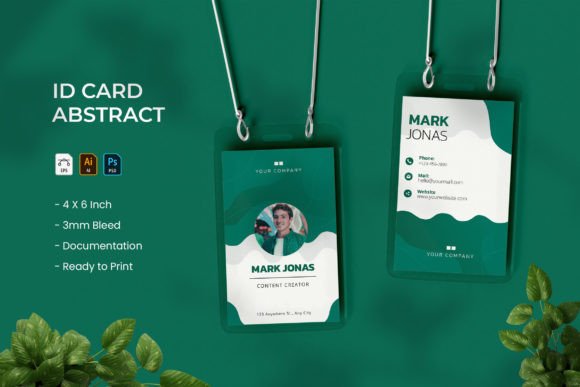
The core distinction of Brosis - ID Card lies in its commitment to minimalism. Unlike templates that rely heavily on complex graphics, gradients, or decorative borders, this design leverages strong fonts and negative space to create impact. The layout is described as modern, simple, and unique, which suggests a departure from generic, overused corporate styles. By stripping away non-essential elements, the design forces the viewer to focus on the most critical information: the name, the role, and the contact details.
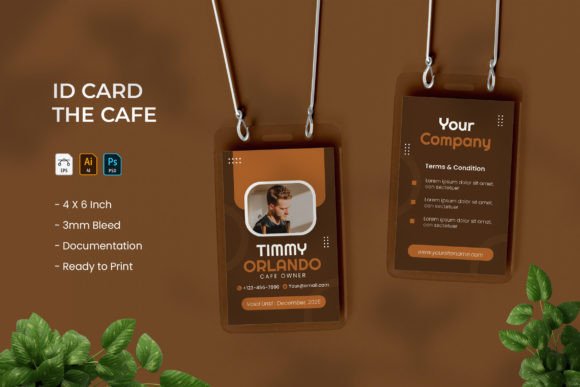
This approach is particularly effective for portrait format printing. The vertical orientation allows for a streamlined presentation of information, making it ideal for scenarios where space is limited or where a sleek profile is preferred. The design philosophy here aligns with contemporary trends in fashion, lifestyle, photography, and architecture. In these fields, the ability to convey a message through simplicity is often valued more highly than ornate decoration. A photographer might use this card to let the image speak for itself, while an architect might use the clean lines to reflect structural precision.
Technical Specifications and Print Readiness
When evaluating any print resource, the technical specifications are just as important as the visual appeal. Brosis - ID Card is built with professional printing standards in mind. It is provided in CMYK color mode, which is essential for accurate color reproduction on standard commercial printers. Unlike RGB files used for screens, CMYK ensures that the colors you see on your monitor will translate accurately to the final physical product.
The resolution is set at 300 DPI (dots per inch), the industry standard for high-quality offset and digital printing. This prevents pixelation or blurriness, ensuring that even small text remains sharp and legible. The dimensions are fixed at 4 x 6 inches, a size that offers slightly more real estate than a standard credit-card-sized business card. This extra space can be utilized effectively for additional branding elements or larger imagery without feeling cramped. Being fully print-ready means that users do not need to perform complex pre-press adjustments before sending the file to a printer.
Customization and File Accessibility
One of the primary concerns for potential users is the difficulty of modifying a template. Brosis - ID Card addresses this by offering multiple file formats: AI, EPS, and PSD. This variety is a significant advantage because it accommodates different levels of technical expertise and software preferences.
- Adobe Illustrator (AI) and EPS: These vector-based formats are ideal for users who prioritize scalability and precise control over typography and line work. They allow for easy resizing without loss of quality.
- Adobe Photoshop (PSD): This raster-based format is perfect for users who need to manipulate images directly. It supports layers, allowing for non-destructive editing of photos and background elements.
The template includes well-organized layers, which is a crucial feature for efficient workflow. Instead of a chaotic collection of elements, the design separates text, images, and background components logically. This organization makes the process of swapping out pictures and updating words intuitive. For a user with moderate design skills, the instruction "just add your own pictures and words" is achievable without needing extensive training. The inclusion of help files further reduces the learning curve, providing guidance on how to navigate the software and execute changes effectively.
Comparing Approaches to Identity Design
To understand the value proposition of Brosis - ID Card, it is helpful to compare it against alternative approaches to creating professional cards. Many users face a choice between hiring a graphic designer, using a drag-and-drop online builder, or purchasing a downloadable template like Brosis.
Compared to hiring a professional designer, Brosis - ID Card offers a cost-effective solution with immediate availability. However, it lacks the bespoke nature of a custom commission. If a brand requires a completely unique visual system that cannot be replicated through standard templates, a designer would be necessary. Conversely, if the goal is to establish a professional presence quickly and affordably, this template provides a high-quality foundation.
When compared to online drag-and-drop builders, Brosis - ID Card offers greater flexibility regarding file ownership and offline editing. Online tools often lock designs into proprietary ecosystems, limiting the ability to export high-resolution files for professional printing or modify them outside the browser. With Brosis, the user owns the source files (AI, EPS, PSD) indefinitely. This allows for future modifications, reprints, or integration into other marketing materials without recurring subscription fees or platform limitations.
Best-Fit Scenarios and Limitations
While Brosis - ID Card is versatile, it is not a universal solution. Its strengths are most apparent in specific contexts. Professionals in creative industries such as fashion, lifestyle, photography, and architecture will find the template's emphasis on imagery and typography particularly resonant. The 4 x 6 inch portrait format works well for showcasing a portfolio piece or a stylized logo alongside contact information.
However, there are tradeoffs to consider. The simplicity of the design may feel too sparse for industries that rely on heavy branding, dense information, or traditional corporate aesthetics. A financial institution or a legal firm might prefer a layout that conveys stability through structure and density rather than open space. Additionally, while the template is "easy to change," it still requires access to Adobe Creative Cloud software or compatible alternatives. Users without design experience may find the interface intimidating compared to the simplified interfaces of web-based builders.
Another limitation to note is the exclusion of preview images in the package. While the help files explain the process, users must visualize the final result based on the blank template. This places a higher burden on the user to have a clear vision of their content before starting the design process.
Making the Decision
Selecting the right identity tool depends on balancing budget, technical skill, and design goals. Brosis - ID Card is an excellent choice for those who want full control over their design assets and possess the basic skills to edit vector or raster files. It is particularly suitable for freelancers and small business owners who need a professional look but cannot justify the cost of a custom agency project.
If your priority is speed and zero technical overhead, an online builder might be preferable. If you require a unique, one-of-a-kind brand identity, a custom designer is the better path. However, for those seeking a middle ground—a high-quality, print-ready, editable template that supports professional output in CMYK and 300 DPI—Brosis - ID Card stands out as a robust option. Its two-page structure allows for comprehensive information delivery, while its organized layers ensure that the customization process remains efficient.
Ultimately, the effectiveness of any design template comes down to how well it executes its intended purpose. Brosis - ID Card succeeds by adhering to a clear design philosophy: letting strong fonts and modern layouts carry the weight of the message. For professionals in creative fields who value clarity and elegance, this template offers a practical and reliable foundation for establishing a lasting professional impression.